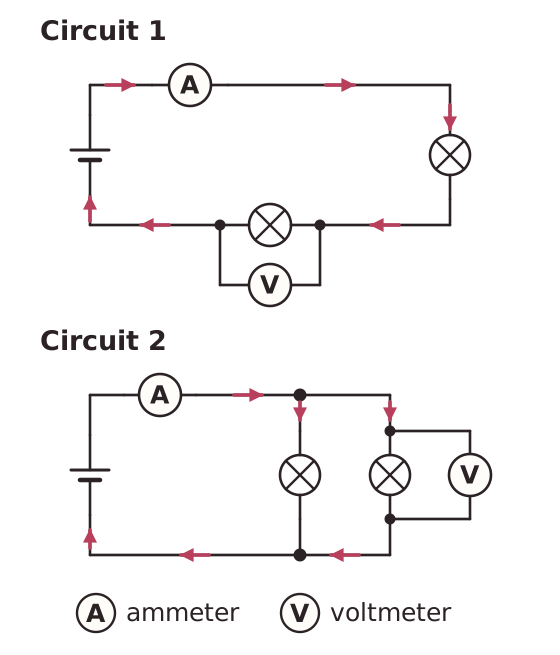
In a series circuit the components are connected one after another in a single loop. The current is the same at every point in the loop. The potential difference (p.d.) of the supply is shared between the components, so the p.d.s across the components add up to the p.d. of the supply. Two identical lamps in series with a 6 V supply share it equally, so each has 3 V across it. If one component is removed or breaks, the loop is broken and everything stops.
In a parallel circuit the components are on separate branches. The current splits at a junction and joins again at the next one, so the currents in the branches add up to the total current from the supply. For example, a 2 A current can split into 0.5 A in one branch and 1.5 A in the other. Each branch has the same p.d. as the supply. If one branch is broken, the other branches still work.
An ammeter measures current and is connected in series with the component, so that the current flows through it. A voltmeter measures p.d. and is connected in parallel with the component, across its two ends. In both types of circuit the cell or power supply transfers energy to the charge, and the components transfer that energy to their surroundings.