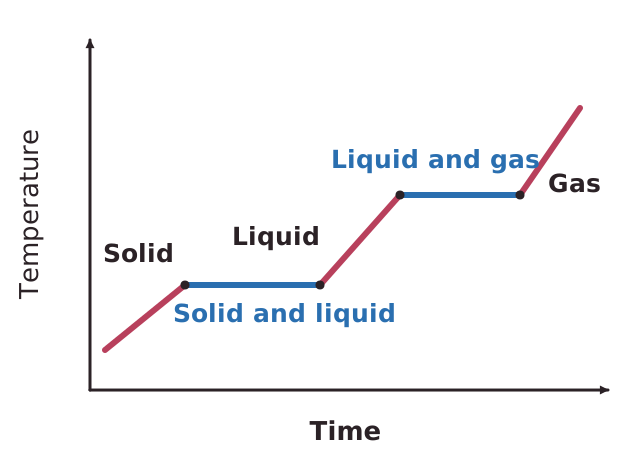
When a substance is heated, the energy supplied can do one of two jobs. It can raise the temperature, or it can change the state. Two quantities describe these jobs.
The specific heat capacity of a substance is the energy needed to raise the temperature of 1 kg of the substance by 1 °C. Its unit is J/kg °C. Water has a high value, 4200 J/kg °C, so 4200 J raises the temperature of 1 kg of water by 1 °C.
The specific latent heat of a substance is the energy needed to change the state of 1 kg of the substance without changing its temperature. Its unit is J/kg. The specific latent heat of fusion is used for melting and freezing. The specific latent heat of vaporisation is used for boiling and condensing.
The difference is what the energy does. With specific heat capacity, the particles gain energy and move faster, so the temperature rises. With specific latent heat, the energy is used to overcome the forces between the particles, so the state changes and the temperature stays constant while it happens.