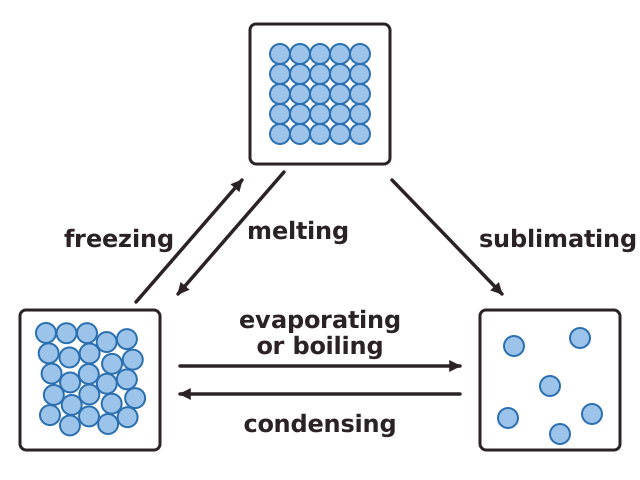
A substance can change state by melting (solid to liquid), freezing (liquid to solid), evaporating or boiling (liquid to gas), condensing (gas to liquid) or sublimating (solid straight to gas). In all of these changes the particles are the same, but their arrangement and movement change.
Because no particles are gained or lost, the mass is conserved. If 50 g of ice melts, the water formed has the same mass as the ice. The mass of a substance before and after a change of state is always the same.
These changes of state are physical changes. A physical change is reversible, and the material recovers its original properties if the change is reversed. Water that has been frozen, melted and refrozen is still the same water.
Some chemical changes are different. When wood burns, new substances are formed, such as ash, and the original wood cannot be recovered by reversing the change. So the material does not get its original properties back.