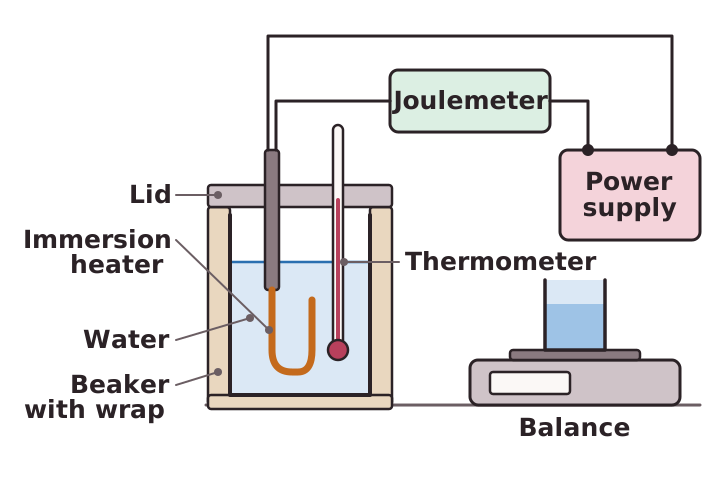
Specific heat capacity of water. Use a balance to measure a mass of water in an insulated beaker, for example 0.25 kg. Put an immersion heater and a thermometer in the water, and place a lid and insulation around the beaker. Record the starting temperature, switch the heater on and stir gently. After several minutes record the final temperature. The energy supplied is read from a joulemeter, or found from the potential difference × current × time.
Work out the temperature change, then use specific heat capacity = change in thermal energy ÷ (mass × change in temperature). The accepted value for water is 4200 J/kg °C. A student usually finds a higher value because some energy is lost to the surroundings, so less energy heats the water than was supplied. A lid and insulation reduce this loss, and stirring gently makes the water all one temperature. The mass of water is kept the same, the time of heating is changed and the temperature is measured.
Temperature-time graph for melting ice. Put crushed ice and a thermometer in a beaker and heat it steadily, for example by standing it in a water bath. Stir and record the temperature every 30 seconds until all the ice has melted and the water has warmed up.
Plot temperature against time. The temperature rises to 0 °C, then the line is flat while the ice is melting, because the energy is used to change the state and not to raise the temperature. Once all the ice has melted, the temperature of the water rises again.