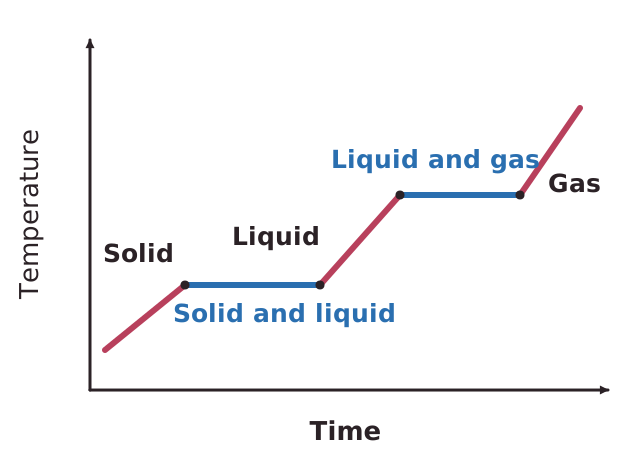
The particles in a system have energy in two stores. They have kinetic energy because they are moving, and potential energy because of the forces between them. The total of these is the internal energy of the system.
Heating a system transfers energy to it, so its internal energy increases. This has one of two effects. If there is no change of state, the energy increases the kinetic energy of the particles. They move or vibrate faster, so the temperature rises.
If the substance is changing state, the energy supplied is used to overcome the forces between the particles, which increases their potential energy. The particles do not speed up on average, so the temperature stays constant during the change of state. For example, water boils at 100 °C, and while it boils and is still being heated its temperature stays at 100 °C.
Once the change of state is complete, extra heating raises the temperature again.