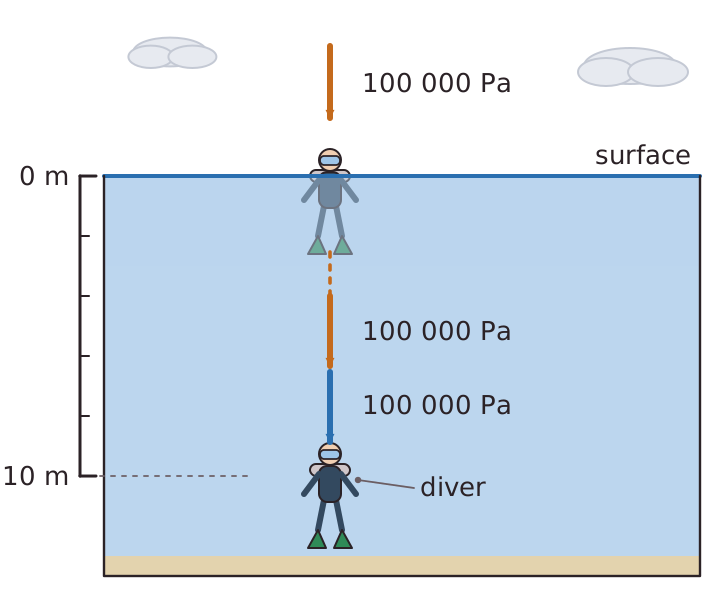
A fluid is a liquid or a gas. The particles of a fluid push on any surface they touch, so a fluid has a pressure. In a liquid that is open to the air, two things add together to give the pressure at a point: the pressure due to the liquid itself, and atmospheric pressure from the air pressing down on the surface of the liquid.
At the surface of a lake there is no water above you, so the pressure is just atmospheric pressure, about 100 000 Pa. Going down, the weight of the water above you adds to this. The total pressure is therefore the pressure due to the liquid plus atmospheric pressure. The pressure due to the water increases with depth, but atmospheric pressure stays about the same at every depth in the lake.
For example, 10 m below the surface the water adds about 100 000 Pa. The atmosphere still adds about 100 000 Pa, because the air presses on the surface and the water passes this pressure on to everything below. The total pressure on a diver there is about 200 000 Pa, twice the pressure at the surface.