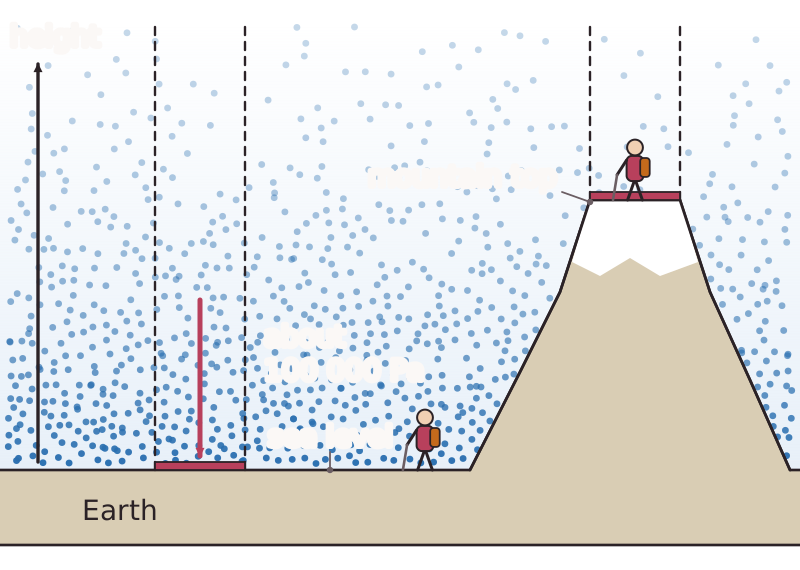
The Earth is surrounded by a layer of gas called the atmosphere. A simple model treats it as a huge number of air molecules held close to the Earth by gravity. The molecules move constantly and collide with every surface they meet. These collisions produce atmospheric pressure, which you can also think of as the weight of the air above a surface pressing down on it.
Gravity pulls the air towards the surface, so the air is most dense at sea level, where the molecules are packed closest together. As you go higher the air becomes thinner: the molecules are further apart and there are fewer of them in each cubic metre. The atmosphere has no sharp top. It just gets thinner and thinner until it fades into space.
This explains why pressure falls with height. The higher you are, the less air there is above you, so its weight is smaller. The air is also thinner, so fewer molecules hit a surface each second. Both effects mean the pressure decreases as height increases. At sea level atmospheric pressure is about 100 000 Pa, and at the top of a high mountain it is much lower.