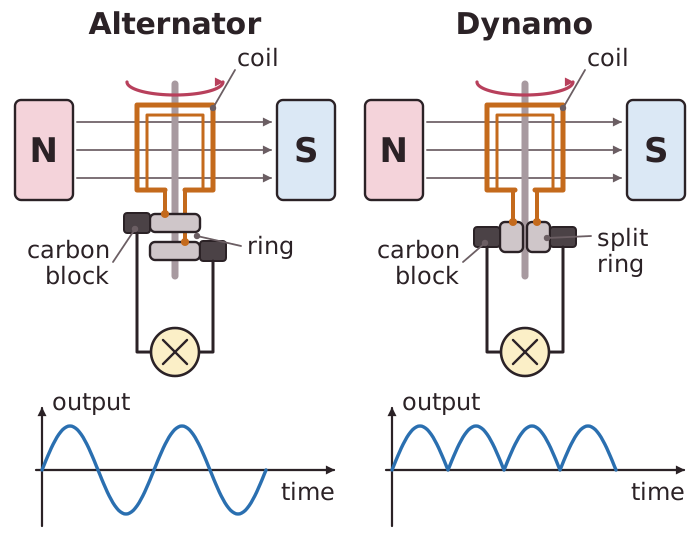
An alternator is a generator that spins a coil in a magnetic field (or spins a magnet inside a coil). As the coil turns, its sides cut the field lines and a potential difference is induced. Half a turn later the side that was moving up is moving down, so the potential difference reverses. The output is alternating current (a.c.), which changes direction every half turn.
The ends of the coil are joined to two slip rings that turn with it. Carbon brushes press against the rings and carry the current to the external circuit. The induced potential difference is zero when the coil is at right angles to the field, because its sides then move along the field lines and cut none of them. It is greatest when the sides cut the lines fastest. Spinning the coil faster makes the peak potential difference larger and the frequency higher.
A dynamo is built the same way, but the slip rings are replaced by a split-ring commutator. The commutator swaps the connections to the external circuit every half turn, just as the coil's own potential difference reverses. The current in the external circuit therefore always flows in the same direction: direct current (d.c.). It still varies in size, but it never reverses. The directions of the potential difference in the coil are opposite in each half turn, and the commutator corrects for this.