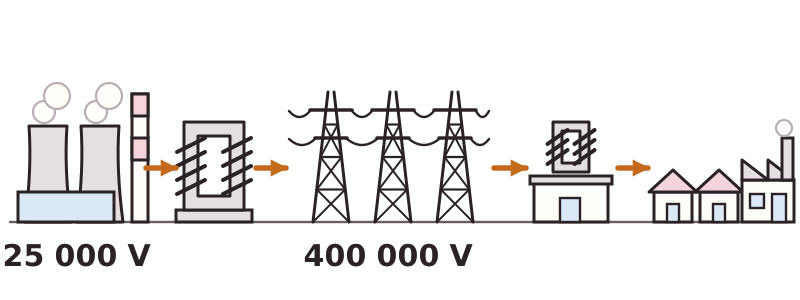
Transformers let the national grid use different voltages in different places. A power station generates electricity at a voltage of about 25 000 V. A step-up transformer at the power station increases it, up to 400 000 V, for transmission through the overhead cables.
Increasing the voltage reduces the current in the cables, so less energy is wasted as heat. This is why a step-up transformer is used at the power station, at the start of the transmission lines.
Near towns and cities the electricity arrives at a substation. A step-down transformer in the substation reduces the voltage in stages. For domestic use the voltage is reduced to about 230 V, which is safe in the home. Factories can be supplied at an intermediate voltage.
So the order is: power station, step-up transformer, high-voltage cables, step-down transformer, homes and other users.