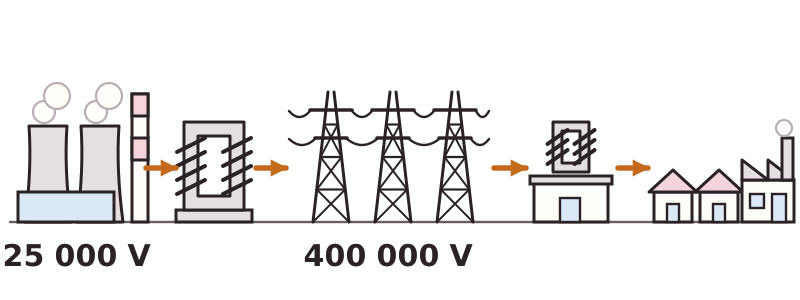
The national grid is the network of cables and transformers that carries electrical energy from power stations to homes, schools and factories. Energy is transferred through the transmission lines at very high voltages, up to 400 000 V.
The reason is the current. Power equals potential difference multiplied by current. To transfer a certain power, a higher voltage means a smaller current. The cables have resistance, so a current heats them and energy is wasted as heat. The larger the current, the more heat is lost. A smaller current means less heat is lost in the transmission lines, so the grid is more efficient.
For example, if the voltage is increased 10 times for the same power, the current becomes 10 times smaller. The heat wasted in the cables falls a great deal.
High voltages are dangerous in homes. In each locality the voltage is reduced to about 230 V, which is safe for domestic use.