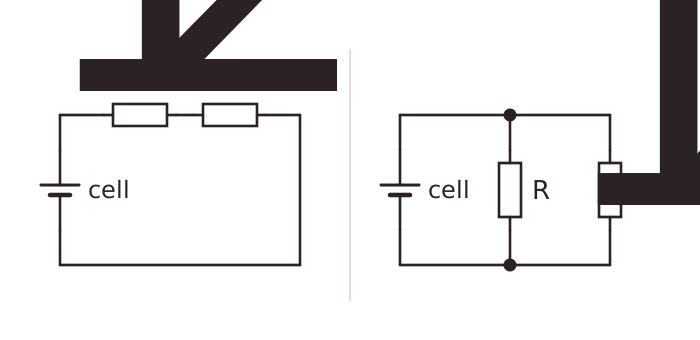
In a series circuit the components are connected one after another in a single loop, so the charge has to pass through every resistor in turn. Each resistor opposes the flow, so the resistances add: net resistance = R1 + R2. Adding another resistor in series therefore increases the net resistance, and the current from the same supply gets smaller. Two 10 Ω resistors in series have a net resistance of 20 Ω.
In a parallel circuit each resistor is on its own branch, so the charge can choose between separate paths. Adding a second resistor in parallel gives the charge an extra path, so for the same potential difference the total current from the supply is greater. A greater current for the same potential difference means the net resistance has decreased. The net resistance of resistors in parallel is always smaller than the smallest single resistor, and two identical resistors in parallel have half the resistance of one of them, so two 10 Ω resistors in parallel have a net resistance of 5 Ω.
To sum up: in series the net resistance is increased, and in parallel the net resistance is decreased.