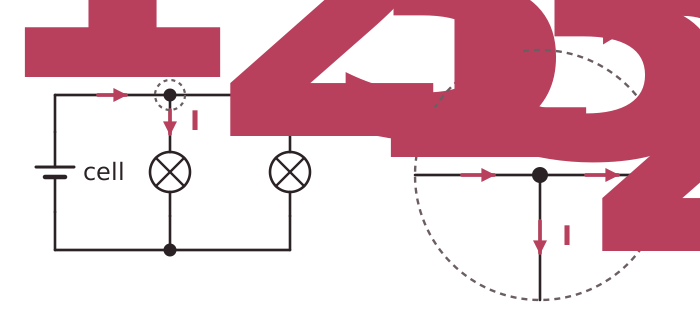
A junction is a point where wires join and the current can split or combine. Current is conserved at a junction. This means the total current entering a junction equals the total current leaving it.
The reason is that charge is not gained or lost at a junction. It cannot be created, destroyed or stored there, so the charge flowing in each second must equal the charge flowing out each second.
For example, if 5 A enters a junction and splits into two wires, one carrying 2 A, the other must carry 3 A. In a parallel circuit, the currents in the branches add up to the current from the cell. In a series loop there are no junctions, so the current is the same everywhere.