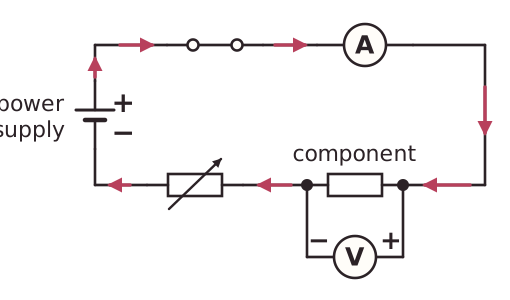
To explore how the resistance of a component changes, build a test circuit. The component is connected in series with an ammeter, a power supply and a variable resistor. A voltmeter is connected in parallel across the component only. The variable resistor changes the current. At each setting, read the current and the potential difference, then calculate resistance = potential difference ÷ current (R = V ÷ I).
Filament lamp: as the current increases the filament gets hotter and the resistance increases. For example, 3.0 V and 0.50 A gives 6 Ω, but 6.0 V and 0.80 A gives 7.5 Ω. Diode: test it with the connections one way and then reversed. The resistance is low in the forward direction and very high in reverse. A protective resistor is placed in series so the current cannot damage the diode.
Thermistor: place it in a beaker of water, heat the water and use a thermometer to measure the temperature. Stir the water and take readings of V and I at each temperature. LDR: change the light intensity, for example by moving a lamp closer to or further from the LDR, and measure V and I each time. Keep other conditions, such as the potential difference supply, the same so the test is fair.