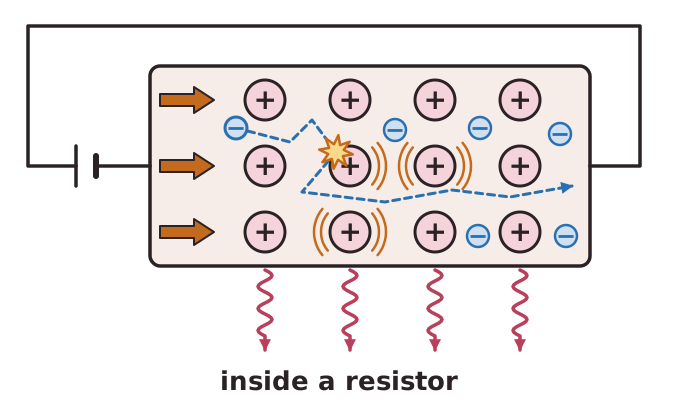
A metal wire or resistor contains a lattice of positive ions, held in fixed positions, with free electrons that can move through it. When there is a potential difference across the resistor, the electrons are pushed along and gain kinetic energy. This flow of electrons is the current.
As the electrons move, they collide with the ions in the lattice. In each collision the electrons transfer some kinetic energy to the ions. The ions vibrate more, and an increase in vibration means the temperature of the resistor rises. The resistor then transfers energy to the surroundings, so it gets hotter.
The more often electrons collide with ions, the higher the resistance. A bigger current means more electrons pass each second, so there are more collisions each second and the heating effect is greater.