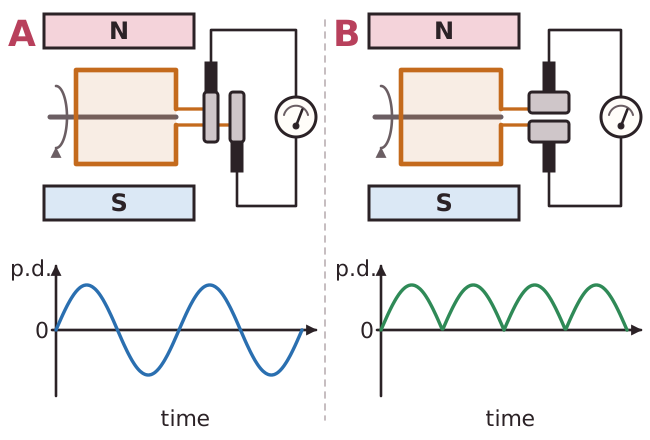
The generator effect is used to make electricity. An alternator generates alternating current (ac). A coil rotates in a magnetic field, or a magnet rotates inside a coil. The ends of the coil are connected to slip rings, and carbon brushes press on the rings to take the current to the circuit. Every half turn the coil cuts the field in the opposite direction, so the current reverses.
A dynamo generates direct current (dc). It is built like an alternator, but the ends of the coil are connected to a split-ring commutator instead of slip rings. The commutator swaps the connections to the circuit every half turn, so the current in the circuit always flows in the same direction.
On a graph of potential difference against time, an alternator gives a wave that rises, falls and goes negative, then repeats. A dynamo gives a potential difference that is always the same sign, rising to a peak and falling to zero twice per turn. Rotating the coil faster gives a higher peak potential difference and more cycles per second.