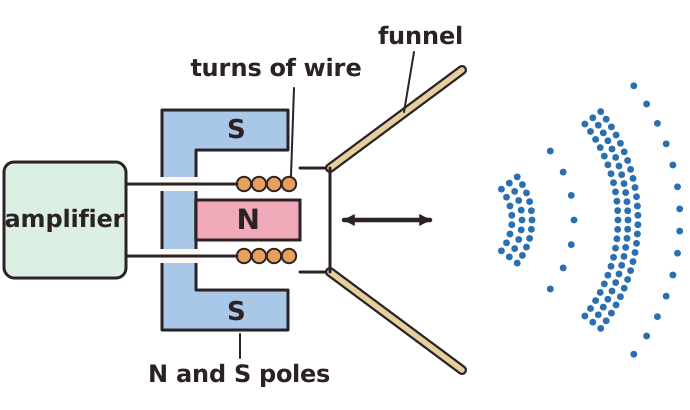
Loudspeakers and headphones use the motor effect to convert variations in current in electrical circuits into the pressure variations in sound waves.
In a moving-coil loudspeaker, a coil of wire is wrapped around one pole of a permanent magnet and attached to a paper cone. The electrical signal from the amplifier is an alternating current, which flows through the coil. The current makes the coil a magnet with its own magnetic field, which interacts with the field of the permanent magnet, so there is a force on the coil because of the motor effect.
The current keeps changing direction, so the force on the coil keeps changing direction. The coil and the cone vibrate backwards and forwards. The cone pushes on the air and makes pressure variations, which travel as a sound wave. The frequency of the sound matches the frequency of the alternating current in the coil, and a larger current gives a larger force and a louder sound.
Headphones work in the same way, with a much smaller coil and cone, so the sound is quiet and close to the ear.