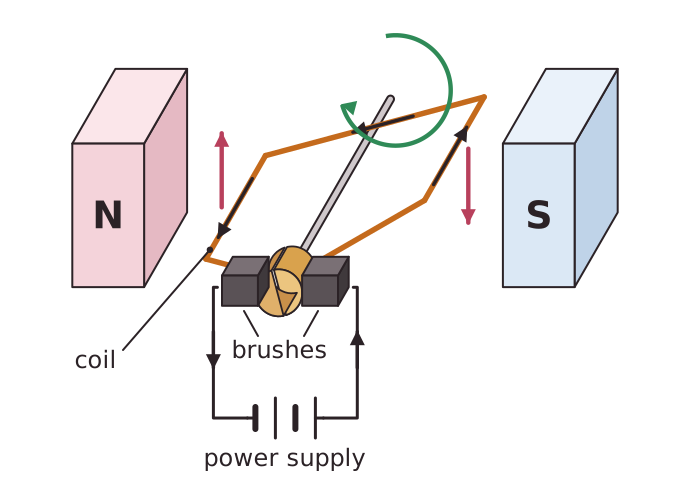
A coil of wire carrying a current in a magnetic field tends to rotate. This is the basis of an electric motor.
In a simple direct current motor, a rectangular coil sits between the poles of a permanent magnet. The current flows along one long side of the coil and back along the other, so the current is in opposite directions on the two sides. Fleming's left-hand rule then shows that the forces on the two sides act in opposite directions: one side is pushed up and the other side is pushed down. Together these forces give the coil a turning effect, so the coil rotates.
When the coil reaches the vertical position the forces no longer turn it. A split-ring commutator, which touches the carbon brushes connected to the supply, reverses the direction of the current in the coil every half turn. The forces on the sides then keep pushing in the direction of rotation, so the coil keeps turning in the same direction.
The motor turns faster if the current is increased or a stronger magnet is used. Reversing the current, or the magnetic field, makes the motor turn the other way.