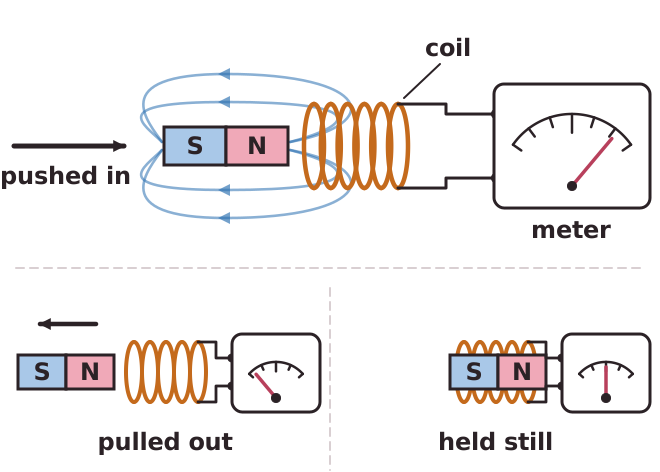
If a wire moves through a magnetic field so that it cuts the field lines, or if the magnetic field around a wire changes, a potential difference is induced across the ends of the wire. If the wire is part of a complete circuit, an induced current flows. This is called the generator effect.
The induced potential difference gets bigger if the wire or magnet moves faster, if the magnetic field is stronger, if the coil has more turns, or if the coil has a larger area. Moving the wire more slowly, or holding it still in the field, gives a smaller induced potential difference or none at all.
The direction of the induced potential difference and current depends on the direction of movement and on the magnetic field. If you reverse the direction of movement, or swap the poles of the magnet, the induced current reverses. If you reverse both, the direction stays the same.
An induced current has a magnetic field of its own. This field always opposes the change that caused it, either the movement of the conductor or the change in the magnetic field.