The universe is expanding, but gravity between all the matter in it acts to slow that expansion down. Its ultimate fate depends on the average density ρ of the universe compared with a critical density ρc, which is only about 10−26 kg m−3 (a few hydrogen atoms per cubic metre).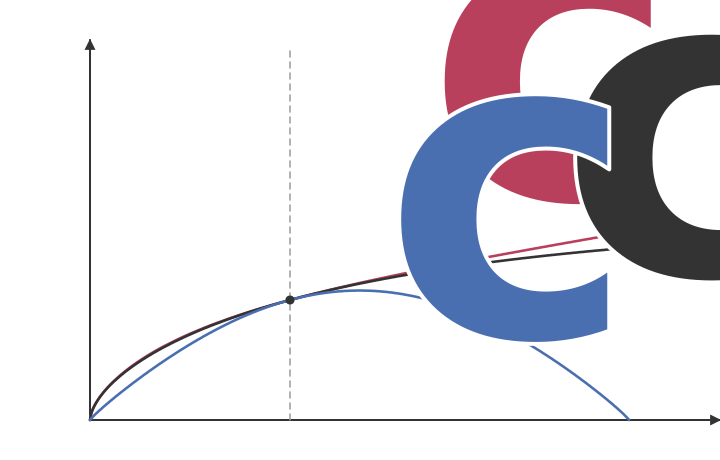
• ρ < ρc (open universe): gravity is too weak to stop the expansion, so the universe expands forever.
• ρ = ρc (flat universe): the expansion slows down, approaching zero speed, but never quite stops or reverses.Why the fate is uncertain. To predict the fate we need to know ρ, and that is very hard to measure:
• the amount of dark matter is uncertain, so the true mass of the universe is not known
• the critical density depends on the Hubble constant, and the value of H0 is itself uncertainObservations of distant Type Ia supernovae in the 1990s suggested that the expansion is actually accelerating. The cause, called dark energy, is not understood, and it adds a further uncertainty. For these reasons scientists still disagree about the ultimate fate of the universe, just as they do about its exact age.