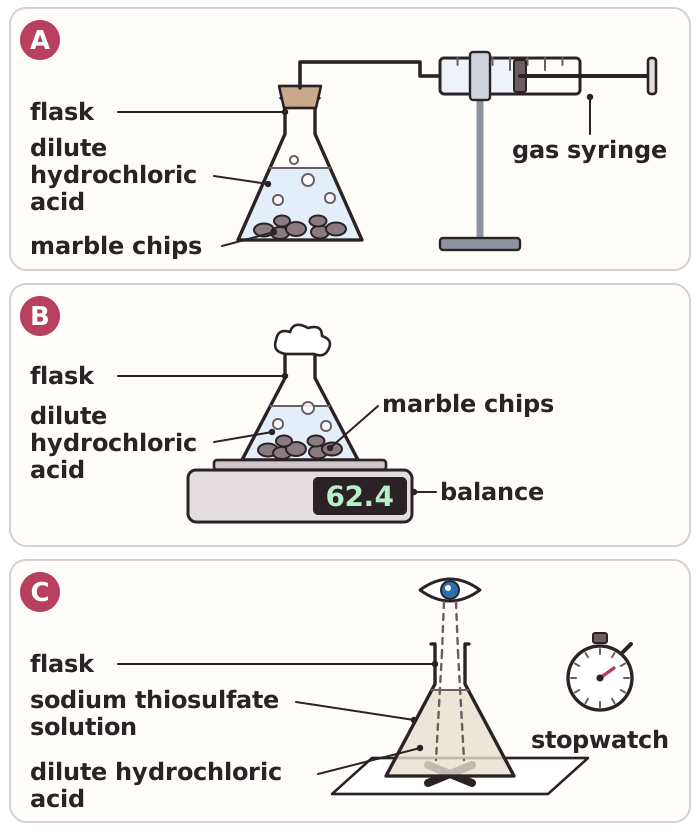
The rate of reaction is how fast reactants are used up or products are made. To find it, you measure how much something changes in a given time. A method only works if there is something you can measure as the reaction goes on.
Marble chips or magnesium react with dilute hydrochloric acid and give off a gas (carbon dioxide or hydrogen). You can collect the gas in a gas syringe and read its volume at regular intervals. Or you can stand the flask on a balance, with cotton wool in the neck to stop spray escaping, and record the mass at regular intervals. The mass goes down as the gas leaves.
In the disappearing cross experiment, sodium thiosulfate solution reacts with dilute hydrochloric acid and makes a cloudy yellow precipitate of sulfur. Stand the flask on a cross drawn on paper and time how long it takes until the cross can no longer be seen. A shorter time means a faster reaction.
To make the test fair, change only one variable at a time. Keep the other variables the same, such as the volumes and concentrations of the reactants. Repeat the experiment to check the results.