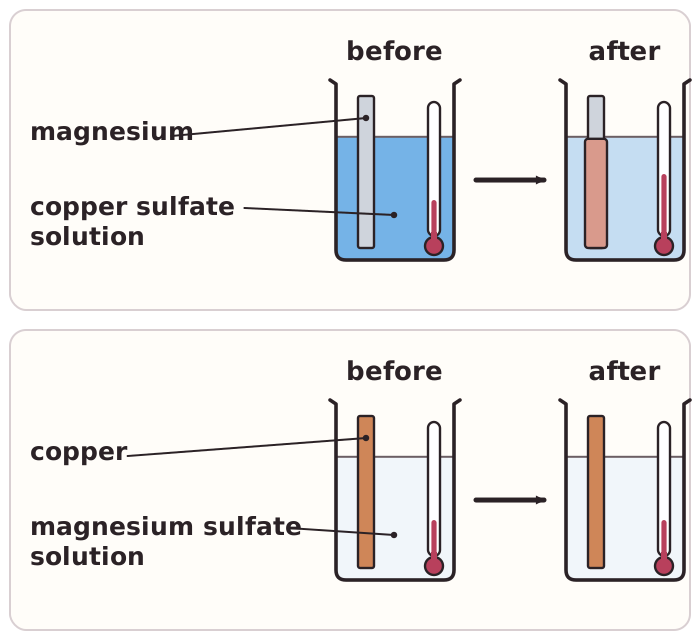
A metal's place in the reactivity order can be worked out from experiments. In a displacement reaction a more reactive metal takes the place of a less reactive metal in a solution of its salt. A metal that is less reactive than the one in solution does not react.
For example, magnesium added to blue copper sulfate solution makes magnesium sulfate and copper: Mg + CuSO4 → MgSO4 + Cu. The solution fades, a brown-pink coating of copper forms and the temperature rises. Magnesium is more reactive than copper. If you put copper in magnesium sulfate solution, nothing happens.
To deduce an order, you put each metal into the salt solutions of the others and record which ones react. A metal that displaces many others is high in the order. Adding results from acid and water reactions helps too. Zinc displaces iron and copper from their salts, iron displaces copper only, and copper displaces none of them. So the order, most reactive first, is magnesium, zinc, iron, copper.