Four things change the rate of a reaction. Raising the temperature makes a reaction faster, and lowering the temperature makes it slower. Increasing the concentration of a reacting solution makes it faster. Increasing the pressure of a reacting gas makes it faster. Pressure only matters when a reactant is a gas.
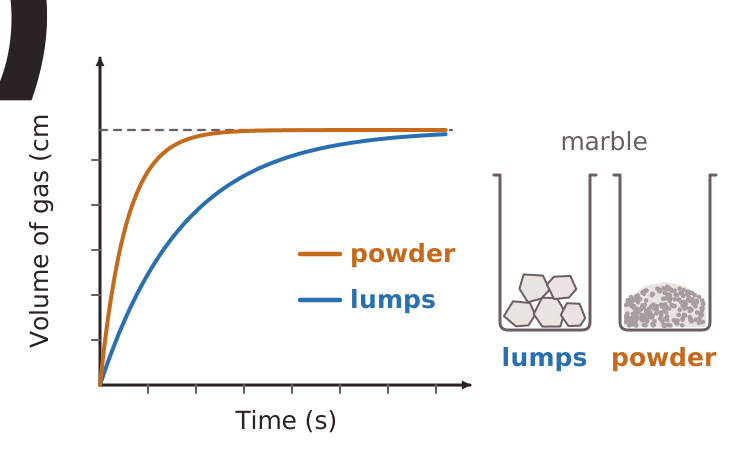
Increasing the surface area of a solid also makes a reaction faster. Powder has a much larger surface area than lumps of the same mass, so a powder reacts faster than lumps.
This can be tested with marble chips and hydrochloric acid. Use the same mass of marble and the same volume of acid each time, once with large lumps and once with powder, and collect the gas. The curve for the powder is steeper at the start, so it is faster. If the acid is in excess, both curves end at the same final volume of gas, because the same mass of marble reacts.