For particles to react they must collide, and they must collide with enough energy. A collision that does this is a successful collision. The rate of reaction depends on how many successful collisions happen in each second, so on both the frequency of collisions and their energy.
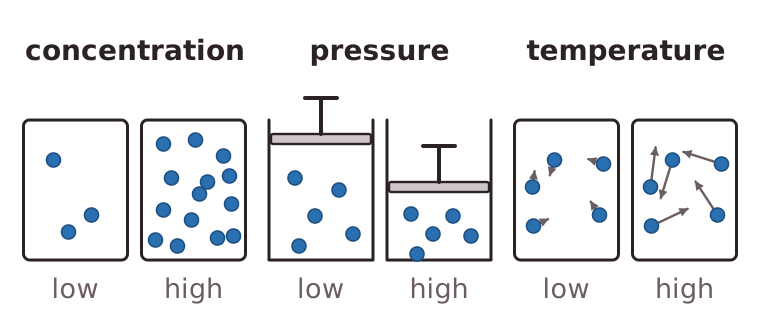
Increasing the concentration of a solution puts more particles in the same volume. The particles collide more often, so the rate increases. Increasing the pressure of a gas does the same thing. The gas particles are pushed closer together, so they collide more often.
Increasing the temperature makes the particles move faster. They collide more often, and each collision has more energy. A bigger fraction of the collisions have enough energy to react, so there are more successful collisions per second and the rate of reaction increases.