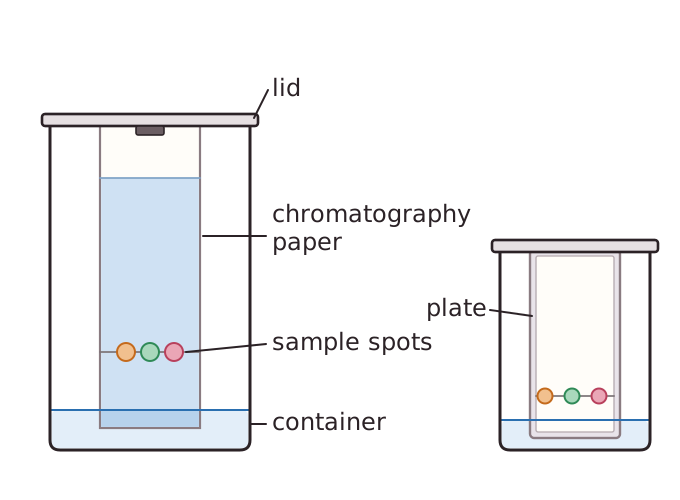
Every type of chromatography has two phases. The stationary phase stays in place. In paper chromatography it is the paper, and in thin layer chromatography it is the layer of silica gel on the plate. The mobile phase is the solvent, which moves through the stationary phase and carries the substances with it.
The substances in a mixture separate because each one is distributed differently between the two phases. A substance that is very soluble in the mobile phase spends more time dissolved in the solvent and is carried a long way. A substance that is strongly attracted to the stationary phase spends more time stuck to it and moves only a short distance.
Because each substance has its own balance between the two phases, different substances travel different distances and end up in different places. A different solvent changes this balance, so it can change how far each substance travels. This is why the mobile phase must be chosen carefully for the mixture being separated.