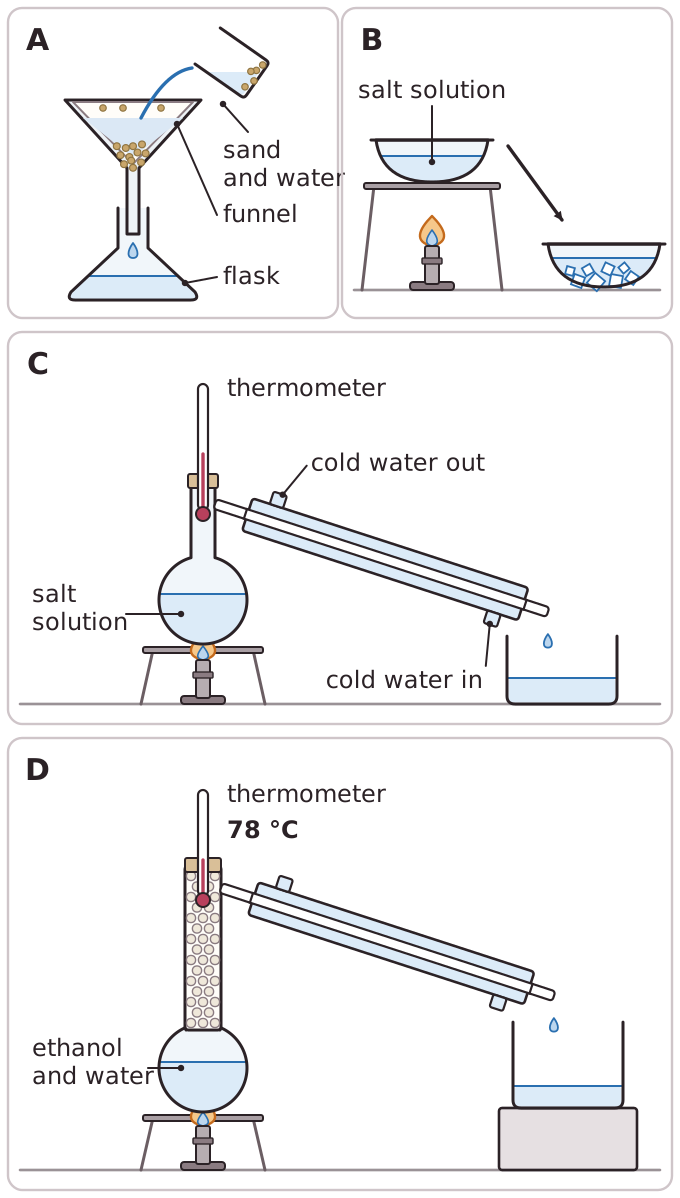
The substances in a mixture are not chemically joined, so they can be separated by physical methods. The right method depends on the substances in the mixture.
Filtration separates an insoluble solid from a liquid, for example sand from water. The mixture is poured through filter paper. The solid stays behind as the residue and the liquid that passes through is the filtrate. Crystallisation obtains a soluble solid from its solution. The solution is heated to evaporate some of the water, then left to cool slowly so that crystals form. The crystals are filtered off and dried.
Simple distillation separates a solvent from a solution, such as pure water from salt solution. The solution is heated and the solvent evaporates. The vapour is cooled in a condenser, where it turns back into a liquid and is collected. The dissolved solid stays in the flask. Fractional distillation separates a mixture of liquids that have different boiling points, such as ethanol (78 °C) and water (100 °C). The mixture is heated and the vapours rise up a fractionating column. The liquid with the lowest boiling point reaches the top first, condenses and is collected first.