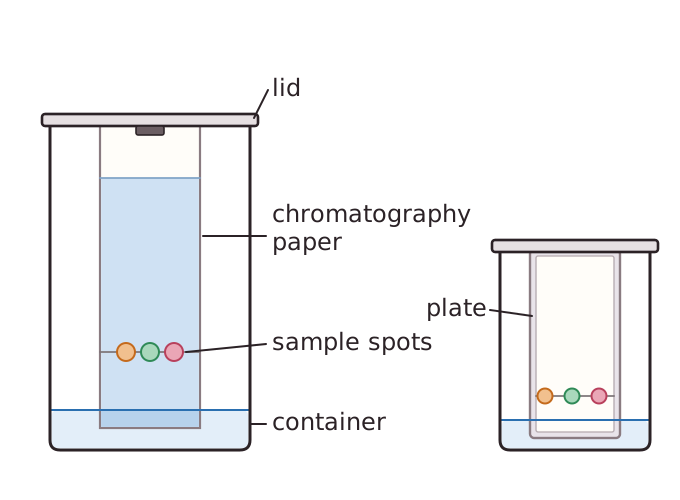
Chromatography separates the substances in a mixture, such as the dyes in an ink. In paper chromatography you draw a start line on chromatography paper in pencil, because pencil does not dissolve in the solvent. You put small spots of each sample on the line and stand the paper in a container with a little solvent, so the solvent is below the start line. The solvent soaks up the paper and carries the substances with it. You take the paper out before the solvent reaches the top and mark the solvent front at once.
Thin layer chromatography (TLC) works in the same way but uses a plate coated with a thin layer of a solid such as silica gel instead of paper. TLC is faster and gives clearer, more compact spots.
The solvent is chosen to suit the substances. An aqueous solvent is based on water and is used for substances that dissolve in water, such as many food dyes. A non-aqueous solvent, such as ethanol or hexane, is used for substances that do not dissolve well in water, such as many plant pigments and permanent ink.
Some substances are colourless, so they cannot be seen on the finished chromatogram. A locating agent is sprayed on the paper or plate to make them visible. For example, ninhydrin turns amino acids purple. Ultraviolet light can also be used to show up spots on some TLC plates.