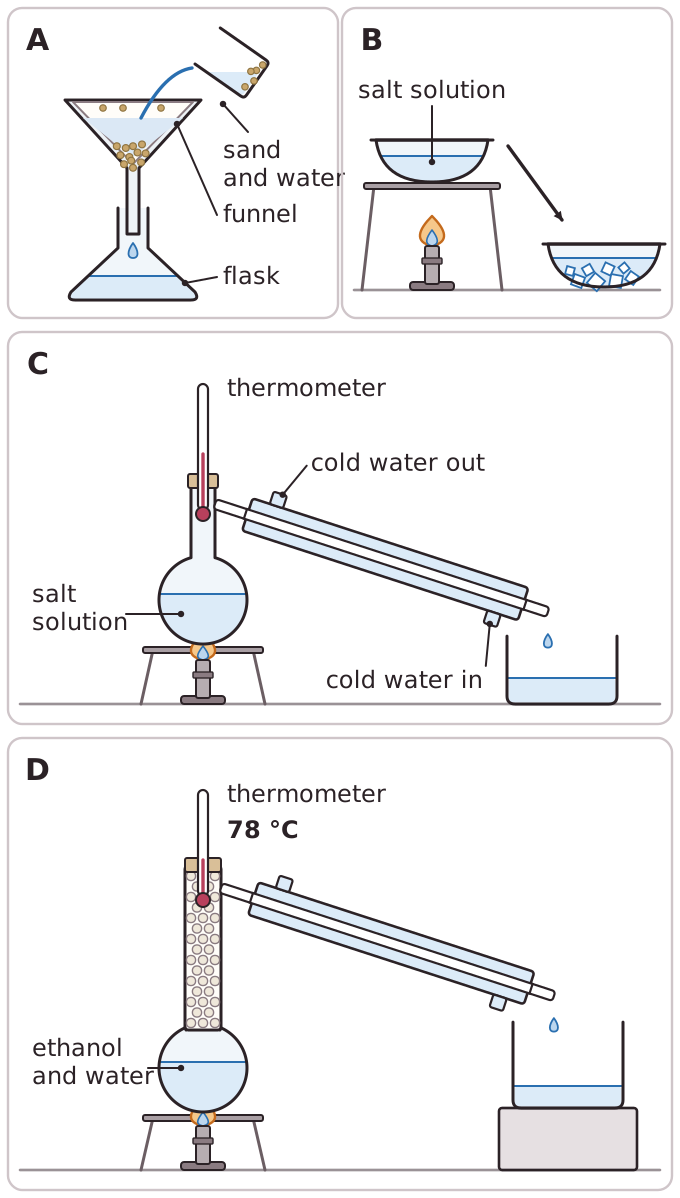
To choose a technique you look at the substances in the mixture and ask what is different about them. There are four main methods.
- Filtration separates an insoluble solid from a liquid, such as sand from water. The solid stays in the filter paper and the liquid passes through.
- Crystallisation separates a soluble solid from its solution, such as copper sulfate from copper sulfate solution. You heat gently to evaporate some of the water, then leave the solution to cool so crystals form, and filter them off.
- Simple distillation separates a solvent from a solution, such as pure water from salt water. The solution is heated, the water boils off and is cooled in a condenser, and the salt stays behind.
- Fractional distillation separates a mixture of liquids that mix together and have different boiling points, such as ethanol and water. The liquid with the lowest boiling point evaporates first and is collected first.
Some mixtures need more than one step. To get both parts of a mixture of sand and salt, you add water, filter off the insoluble sand, and then evaporate or crystallise the salt from the solution.