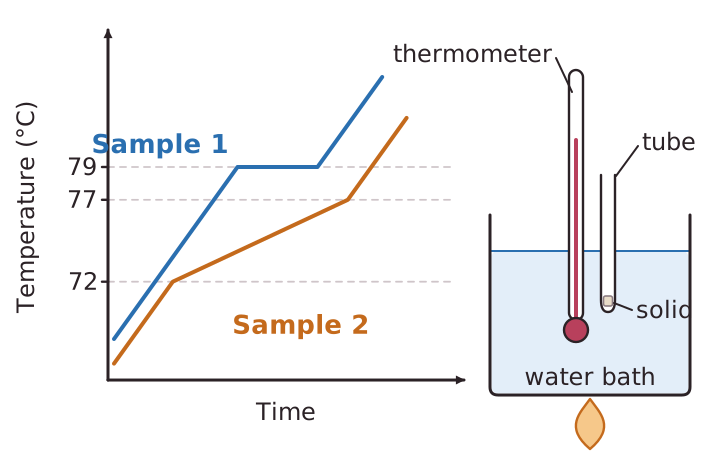
Every pure substance melts at one fixed temperature, called its melting point. Pure water ice melts at 0 °C, and the melting point of a pure compound can be looked up in a data book. A pure sample melts sharply: the temperature stays at the melting point until all of it has melted.
An impure substance behaves differently. It starts to melt at a lower temperature than the pure substance and melts over a range of temperatures instead of at one. The more impurity there is, the lower the starting temperature and the wider the range.
To measure a melting point, a small amount of the solid is heated slowly with a thermometer in it. The temperature at which it starts to melt and the temperature at which it has all melted are recorded. Suppose the data book value for a pure compound is 79 °C. A sample that melts sharply at 79 °C is pure. A sample that melts from 72 °C to 77 °C is impure, because it melts over a range and below the data book value.