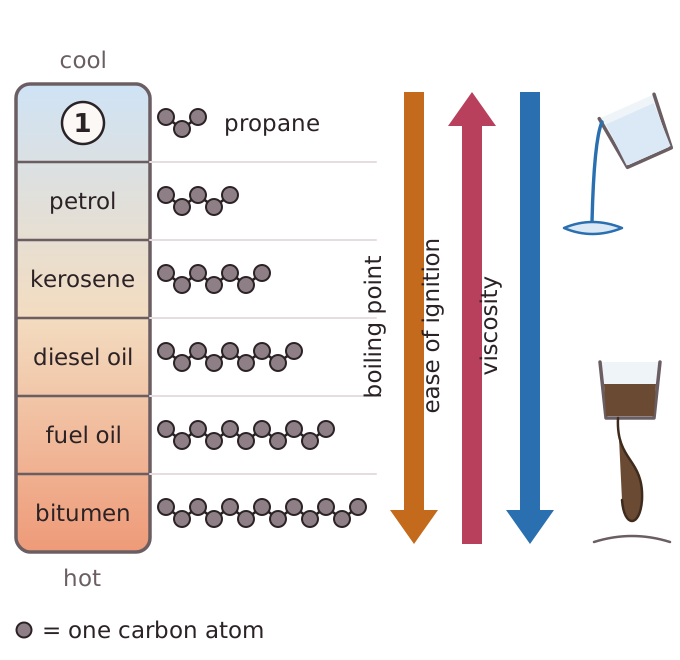
The hydrocarbons in crude oil are mostly alkanes. The fractions differ because their molecules have chains of different length.
Number of atoms: the gases fraction has smaller molecules than the other fractions, with only a few carbon atoms, for example propane, C3H8, and butane, C4H10. Bitumen has very large molecules with long chains of carbon atoms and many hydrogen atoms. Petrol, kerosene, diesel oil and fuel oil lie in between, with the chains getting longer in that order.
As the molecules get longer, three things change. The boiling point increases, because stronger forces between the larger molecules take more energy to overcome. The ease of ignition decreases, so long-chain hydrocarbons are harder to set alight. The viscosity increases, so the liquid flows less easily and becomes thicker.
This is why the gases are collected at the top of the fractionating column and bitumen at the bottom.