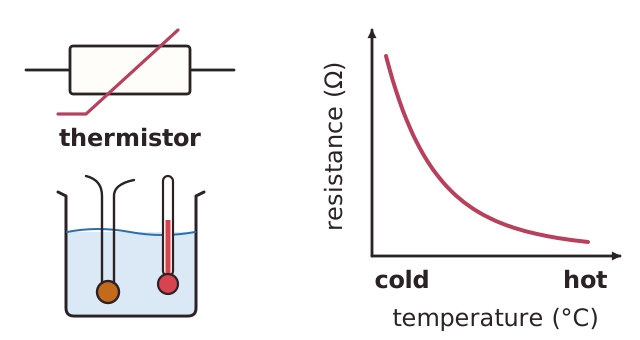
A thermistor is a resistor whose resistance depends on its temperature. At GCSE you only need the negative temperature coefficient (NTC) type.
In an NTC thermistor the resistance is high when the thermistor is cold, so less current flows. As the temperature rises, the resistance falls. So an increase in temperature gives a decrease in resistance, and the current through the thermistor goes up if the potential difference stays the same.
This makes thermistors useful as temperature sensors, for example in a thermostat or a fire alarm.