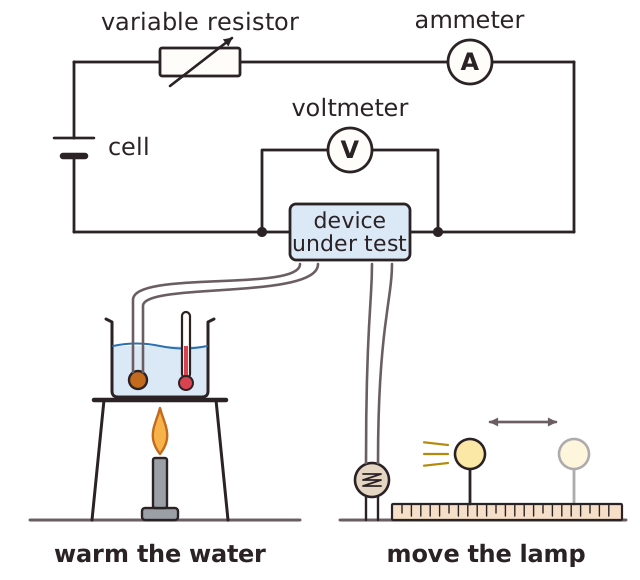
To explore how the resistance of a device changes, we build a circuit and measure the current through the device and the potential difference across it. An ammeter is connected in series with the device. A voltmeter is connected in parallel across the device. The resistance is then found using R = V ÷ I. For example, 12 V and 0.80 A gives 15 ohms.
For a filament lamp or a diode, we use a variable resistor (or a variable power supply) to change the potential difference. We record pairs of readings of current and potential difference, then plot a graph. For the filament lamp the resistance increases as the filament gets hotter. For the diode, the connections are reversed so that both directions are tested: current flows easily one way but the resistance is very high the other way.
For a thermistor, we keep the potential difference fixed and change the temperature, for example by placing it in a beaker of water warmed in steps and measuring the temperature with a thermometer. For an LDR, we change the light intensity, for example by moving a lamp closer or further away, and take readings of current and potential difference at each position.