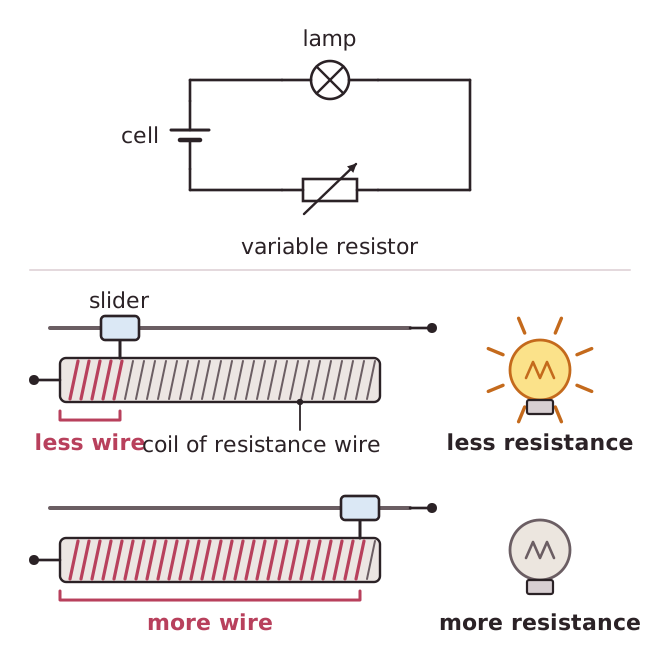
Resistance is how much a component opposes the flow of charge. For the same potential difference, a higher resistance means a smaller current, and a lower resistance means a bigger current. So when the resistance in a circuit increases, the current goes down. When the resistance decreases, the current increases.
A variable resistor is a resistor whose resistance can be changed. Many have a slider or a rotating control that changes how much resistance wire the charge must pass through. More wire in the circuit gives a greater resistance, and less wire gives a lower resistance.
A variable resistor is connected in series with a component to control the current in it. Turn the resistance up and the current gets smaller, so a lamp becomes dimmer or a motor slows down. Turn the resistance down and the current increases, so the lamp is brighter or the motor speeds up. This is how a dimmer switch or volume control works.