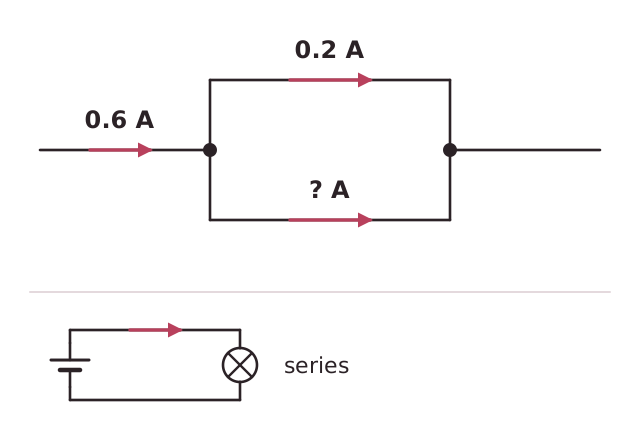
In a series circuit there are no branches, so the current is the same everywhere in the loop. In a parallel circuit, the wire splits at a junction and the charge has more than one path to take.
Current is conserved at a junction. This means the total current entering the junction is equal to the total current leaving it. Charge is not created or destroyed in the wires, and it does not build up at the junction, so every coulomb that arrives must also leave.
So where a circuit splits, the current in the main wire is equal to the sum of the currents in the branches. For example, if 0.6 A enters a junction and 0.2 A goes along one branch, then 0.4 A goes along the other. When the branches have equal resistance the current splits equally, and a branch with lower resistance gets a bigger share.