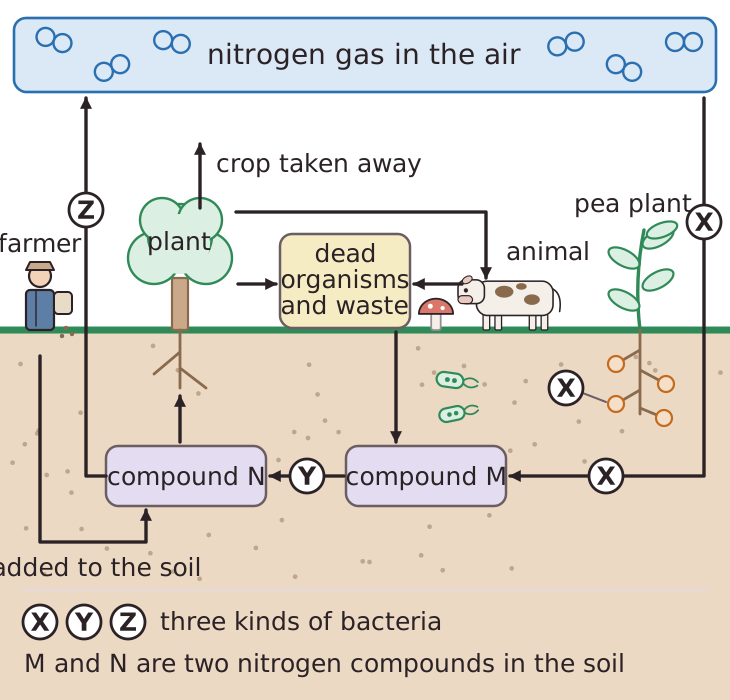
Plants need nitrates from the soil to make proteins. About 78% of the air is nitrogen gas, but plants cannot use it. Bacteria make nitrogen available in several steps. Nitrogen-fixing bacteria turn nitrogen gas into compounds that plants can use. Some live free in the soil, and others live in root nodules on legumes such as peas, beans and clover. Decomposers break down proteins and urea in dead organisms and waste and release ammonium compounds. Nitrifying bacteria then convert ammonium compounds into nitrates, which plants take up through their roots. Denitrifying bacteria do the opposite and convert nitrates into nitrogen gas, which lowers soil fertility.
When crops are harvested, the nitrates they took up are removed from the field. Farmers replace them with fertilisers, such as ammonium nitrate, NH4NO3. Another method is crop rotation: growing a different crop in a field each year, including a legume every few years. Bacteria in the root nodules of the legume add nitrates to the soil, so less fertiliser is needed.
Calculating the percentage of nitrogen in a fertiliser shows how much it supplies. Ammonium nitrate has a relative formula mass of 80. It contains two nitrogen atoms, each with a relative atomic mass of 14, so the nitrogen has a mass of 28. The percentage of nitrogen is 28 ÷ 80 × 100 = 35%.