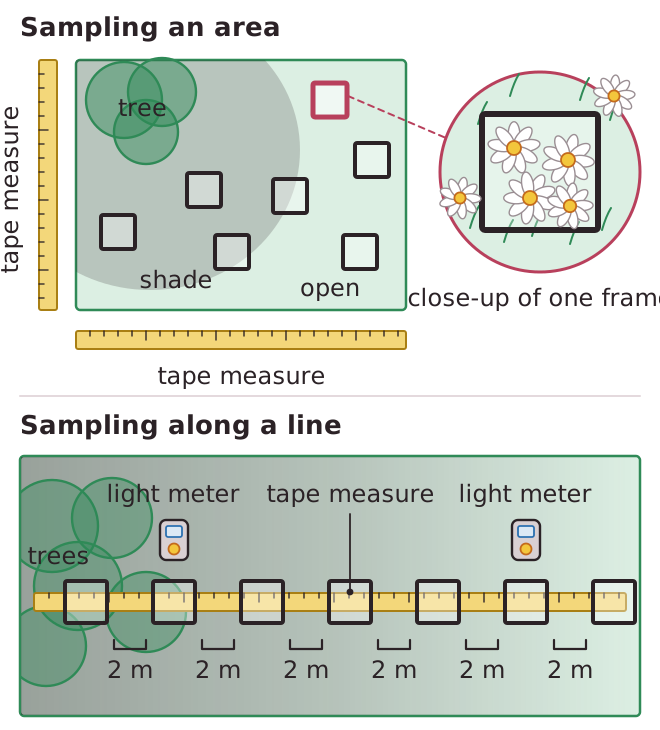
Field-work lets us investigate how the number of organisms in a habitat is related to the environment. Two techniques are used. A quadrat is a square frame of known size that is placed on the ground, and the organisms inside it are counted. A belt transect is a tape measure laid in a straight line across a habitat, with a quadrat placed at regular intervals along it.
Random sampling in an area. Lay two tape measures at right angles along two sides of the area. Use a random number generator to pick two coordinates, and place the quadrat at that point so the choice is not biased. Count the number of organisms of the chosen species in the quadrat. Repeat many times, then calculate the mean. Do this in two areas, for example shade and open ground, and compare them.
Belt transect. Use this when the environment changes gradually, for example from under trees out into an open field. Lay the tape in a line, place the quadrat at regular intervals such as every 2 m, and record the number of organisms at each point.
At each quadrat, measure an abiotic factor, for example light intensity with a light meter, soil moisture with a moisture meter, or temperature with a thermometer. Keep the size of the quadrat the same every time and sample at the same time of day. Using many quadrats makes the results more reliable because it reduces the effect of chance. Wear gloves, avoid touching your face, and wash your hands afterwards.