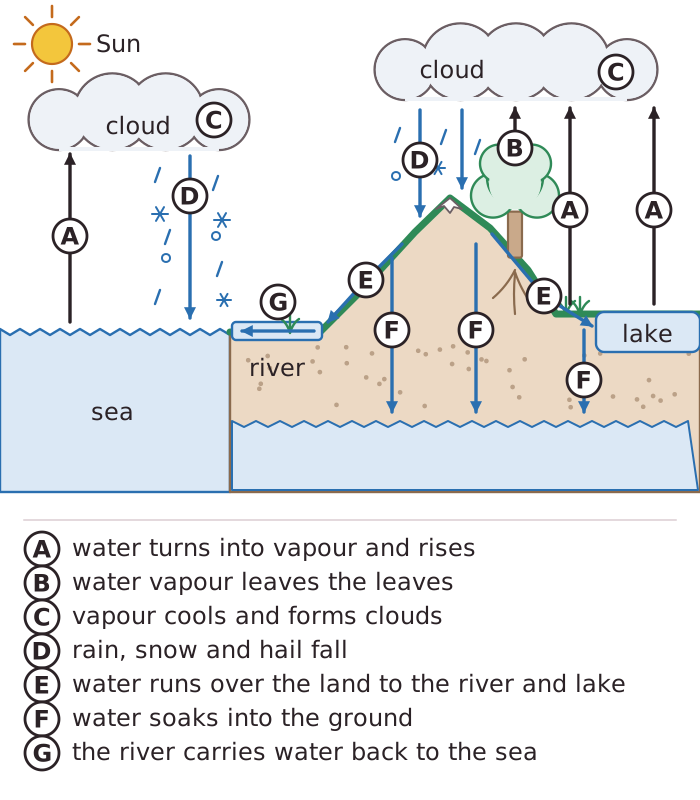
The water cycle moves water between the sea, the air, the land and living things. The Sun's energy causes evaporation from oceans, lakes and soil. Plants lose water vapour from their leaves by transpiration. The water vapour rises and cools, and condensation forms clouds. Water then falls as precipitation, such as rain, snow and hail. It runs into rivers and lakes or soaks into the ground as groundwater, and the cycle starts again.
The cycle matters because all living things need water. It replaces the water in rivers, lakes, reservoirs and groundwater, and plants and animals depend on this supply of fresh water.
Potable water is water that is safe to drink. It is not always pure, because it can still contain dissolved substances. Fresh water from rivers and groundwater is made potable by sedimentation, filtration and chlorination, which kills microorganisms.
In areas of drought there may not be enough fresh water. Sea water can be made potable by desalination, which removes the dissolved salt. One method is distillation: boiling the sea water, condensing the steam and collecting the water, while the salt is left behind. Desalination uses a lot of energy, so it is expensive.