The C=C functional group decides how alkenes react. Like other hydrocarbons, alkenes burn in oxygen in combustion reactions. They tend to burn in air with smoky flames because of incomplete combustion, which produces tiny particles of carbon. For example, with plenty of oxygen: C2H4 + 3O2 → 2CO2 + 2H2O.
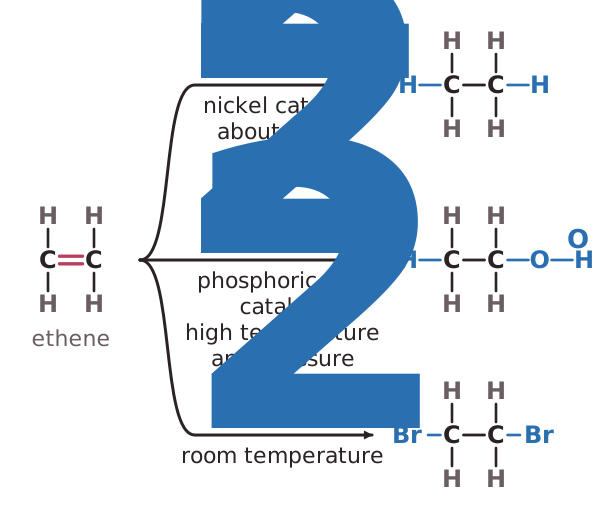
The typical reaction of an alkene is an addition reaction. Atoms add across the carbon-carbon double bond, so the double bond becomes a single bond and only one product forms.
- Hydrogen: an alkene reacts with hydrogen at about 60 °C with a nickel catalyst to make an alkane. Ethene gives ethane.
- Water: an alkene reacts with steam, with a phosphoric acid catalyst at high temperature and pressure, to make an alcohol. Ethene gives ethanol.
- Halogens: chlorine, bromine and iodine add across the double bond at room temperature. Ethene and chlorine make dichloroethane, and ethene and bromine make dibromoethane.
The reaction with bromine is used as a test. Shaking an alkene with orange bromine water turns it colourless, because the bromine adds across the double bond. An alkane has no double bond, so the bromine water stays orange.