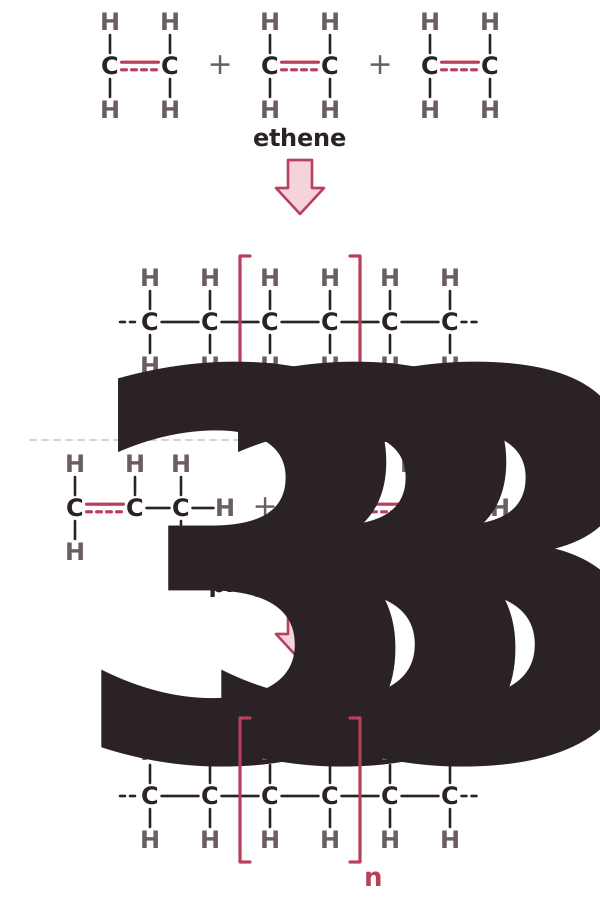
Alkenes can be used to make polymers such as poly(ethene) and poly(propene). The reaction is called addition polymerisation. Many small molecules, called monomers, join together to form very large molecules called polymers. Each monomer must contain a C=C double bond. One bond of the double bond opens up so that each monomer can join to the next one in the chain.
For example, many molecules of ethene, CH2=CH2, join to make poly(ethene). Propene, CH3CH=CH2, joins in the same way to make poly(propene). The name of the polymer is poly followed by the name of the monomer in brackets.
In an addition polymer the repeating unit has the same atoms as the monomer, because no other molecule is formed in the reaction. Propene is C3H6, so the repeating unit of poly(propene) contains 3 carbon atoms and 6 hydrogen atoms. To work out the monomer from a polymer, look at the repeating unit and put the C=C double bond back between the two carbon atoms in the chain.