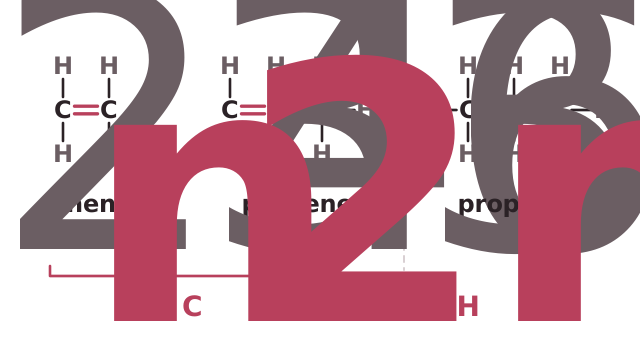
Alkenes are hydrocarbons that contain a double bond between two carbon atoms, written C=C. The double bond is the functional group of an alkene and it decides how the molecule reacts. Alkenes form a homologous series with the general formula CnH2n, so an alkene always has twice as many hydrogen atoms as carbon atoms.
The first four members are ethene (C2H4), propene (C3H6), butene (C4H8) and pentene (C5H10). Pentene has five carbon atoms and ten hydrogen atoms. Every name ends in -ene, and these are the only four alkenes you need to name.
Alkene molecules are unsaturated because the double bond means they hold fewer hydrogen atoms than they could. An alkene has two fewer hydrogen atoms than the alkane with the same number of carbon atoms: propene is C3H6 but the alkane propane is C3H8. Alkanes contain only single bonds, so they are saturated.
An alkene can be shown as a molecular formula, such as C3H6, or as a displayed formula that shows every atom and every bond, with the double bond drawn as two lines. To recognise an alkene, look for a name ending in -ene or a formula that fits CnH2n.