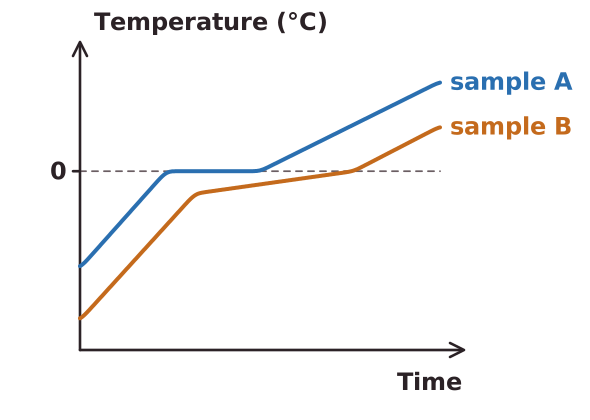
In chemistry, a pure substance is a single element or compound that is not mixed with any other substance. In everyday language, "pure" often means that nothing has been added to something, so it is unadulterated and in its natural state, for example pure milk. Milk is a mixture of many substances, so it is not pure in the chemical sense.
Pure elements and compounds melt and boil at specific temperatures. Pure water, for example, melts at 0 °C and boils at 100 °C. A mixture does not behave like this. It melts over a range of temperatures, and its melting and boiling points are different from those of the pure substance. Salty water freezes below 0 °C and boils above 100 °C.
This means melting point and boiling point data can be used to distinguish pure substances from mixtures. If a sample melts sharply at the known melting point, it is pure. If it melts over a range of temperatures, or at the wrong temperature, it is impure.