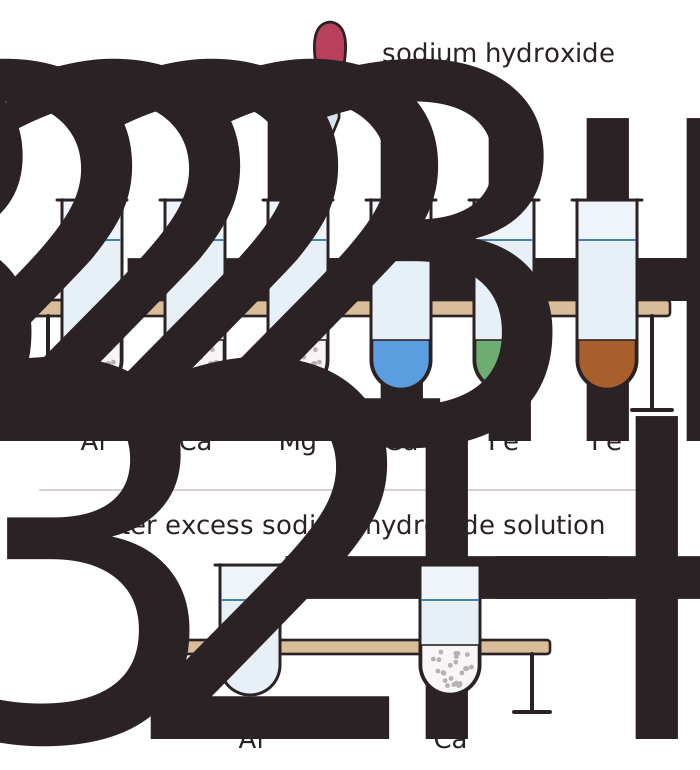
Sodium hydroxide solution can be used to identify some metal ions. Many metal hydroxides are insoluble, so when sodium hydroxide solution is added to a solution of the metal ions, a solid called a precipitate forms.
Aluminium, calcium and magnesium ions all form a white precipitate. To tell aluminium apart, add excess sodium hydroxide solution. Only aluminium hydroxide dissolves in excess, leaving a colourless solution. The calcium and magnesium precipitates stay.
Copper(II), iron(II) and iron(III) ions form coloured precipitates. Copper(II) hydroxide is blue, iron(II) hydroxide is green and iron(III) hydroxide is brown.
The equations use the ions: Cu2+(aq) + 2OH-(aq) → Cu(OH)2(s) and Fe3+(aq) + 3OH-(aq) → Fe(OH)3(s). Iron(II) is like copper(II): Fe2+(aq) + 2OH-(aq) → Fe(OH)2(s). Each iron(III) ion needs three hydroxide ions because of its 3+ charge.