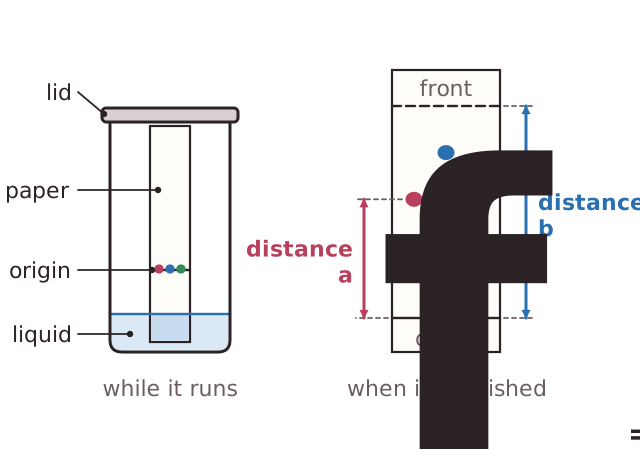
Chromatography is used to separate mixtures and to help identify the substances in them. It uses two phases. The stationary phase does not move (in paper chromatography it is the paper). The mobile phase moves through the stationary phase (it is the solvent). Each substance is distributed between the two phases in a different way, so the substances move different distances and separate.
In the required practical, you draw a start line (the origin) in pencil, because pencil does not dissolve in the solvent. Put a small spot of each coloured substance on the line. Stand the paper in a container with the solvent level below the line, and put a lid on. Take the paper out before the solvent reaches the top and mark the position of the solvent front at once.
The Rf value compares how far a substance moves with how far the solvent moves: Rf = distance moved by substance ÷ distance moved by solvent. Measure to the centre of the spot from the origin. Rf has no units and is less than 1. For example, a spot 2.7 cm from the origin when the solvent has moved 9.0 cm has Rf = 2.7 ÷ 9.0 = 0.3.
Different compounds have different Rf values in different solvents, so Rf values help identify compounds. A mixture may separate into several spots, and the spots depend on the solvent used. A pure compound gives a single spot in every solvent, so chromatography can show whether a substance is pure or impure.