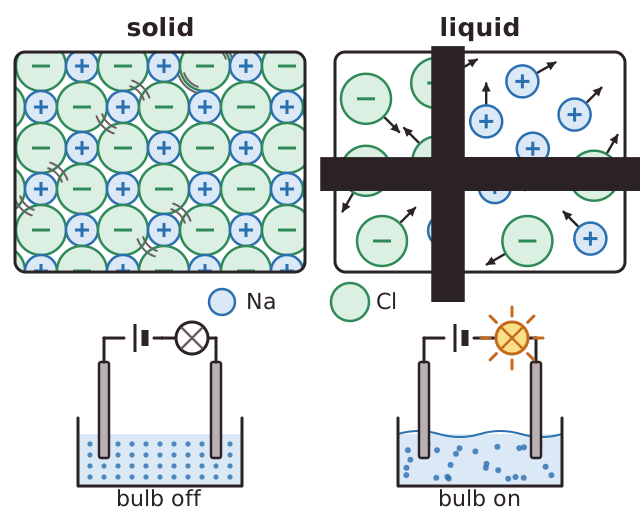
Ionic compounds have a regular structure called a giant ionic lattice. In the lattice, oppositely charged ions are held together by strong electrostatic forces of attraction, and these forces act in all directions. Sodium chloride is the example you need to know.
Ionic compounds have high melting points and high boiling points. This is because the lattice has many strong ionic bonds, and a large amount of energy is needed to break them.
Ionic compounds can conduct electricity, but only in some conditions. When solid, the ions are held in fixed positions in the lattice and cannot move, so a solid ionic compound does not conduct. When it is melted or dissolved in water, the ions are free to move and so charge can flow. Knowledge of the structures of ionic compounds other than sodium chloride is not required.