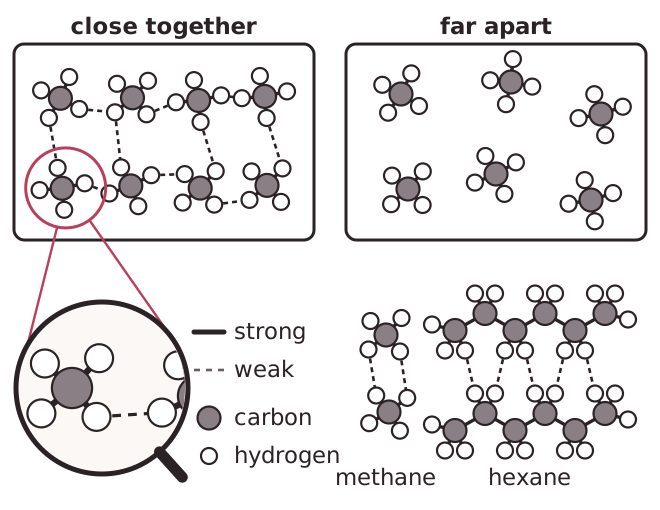
Substances made of small molecules are usually gases or liquids at room temperature. They have relatively low melting points and boiling points. Methane is a gas at room temperature, while hexane, which has larger molecules, is a liquid.
Inside each molecule the atoms are joined by strong covalent bonds. Between the molecules there are only weak forces, called intermolecular forces. When a small molecular substance melts or boils, it is these weak intermolecular forces that are overcome. The covalent bonds are not broken. Little energy is needed, so the melting and boiling points are low.
The intermolecular forces increase as the molecules get bigger, so larger molecules have higher melting points and boiling points.
Small molecular substances do not conduct electricity. The molecules do not have an overall electric charge, so there are no charged particles free to carry current. Remember that intermolecular forces are weak compared with covalent bonds, and use this idea to explain these properties.