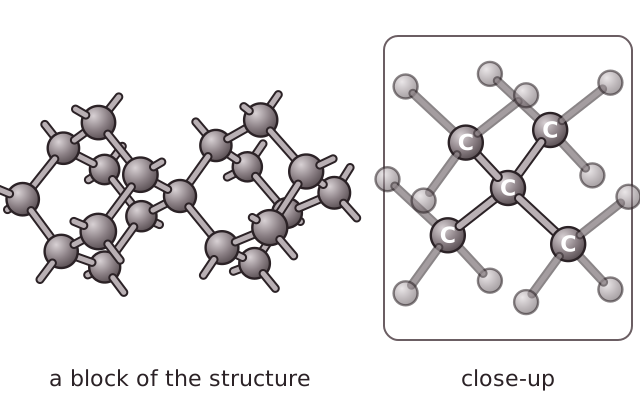
Giant covalent structures are solids with very high melting points. In these structures all of the atoms are linked to other atoms by strong covalent bonds, and the bonding continues through the whole structure. There are no separate small molecules. To recognise a giant covalent structure from a drawing, look for a network of atoms each bonded to its neighbours, repeating in all directions.
To melt or boil one of these substances, the strong covalent bonds must be overcome. This needs a very large amount of energy, which is why the melting and boiling points are so high.
Examples of giant covalent structures are diamond and graphite, which are forms of carbon, and silicon dioxide, also called silica. Compare this with small molecules, where only the weak intermolecular forces are overcome when the substance melts.