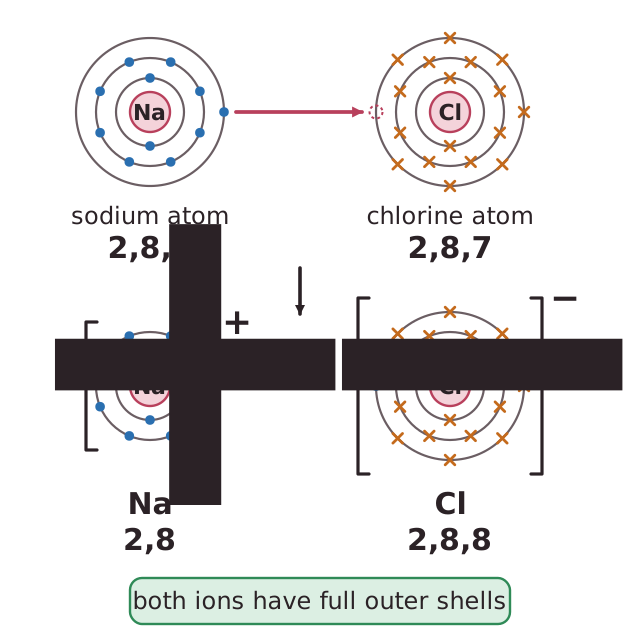
When a metal atom reacts with a non-metal atom, electrons in the outer shell of the metal atom are transferred. The metal atom loses electrons and becomes a positively charged ion. The non-metal atom gains electrons and becomes a negatively charged ion. The ions formed by metals in Groups 1 and 2, and by non-metals in Groups 6 and 7, have the electronic structure of a noble gas (Group 0). This means each ion has a full outer shell.
A dot and cross diagram shows this transfer, using dots for the electrons of one atom and crosses for the electrons of the other. In sodium chloride, one outer electron moves from the sodium atom to the chlorine atom. This gives a sodium ion, Na+, and a chloride ion, Cl-. In magnesium oxide, two electrons move from the magnesium atom to the oxygen atom, giving Mg2+ and O2-.
The charge on these ions depends on the group number. A metal in Group 1 loses one electron, so its ion has a charge of 1+. A metal in Group 2 loses two electrons, so its ion has a charge of 2+. A non-metal in Group 7 gains one electron, so its ion has a charge of 1-. A non-metal in Group 6 gains two electrons, so its ion has a charge of 2-.