 BRAINCAKE
Electron Pair Repulsion Theory
The electron pair repulsion theory can be used to predict the shape and bond angles of covalent molecules and polyatomic ions.
Electron pairs repel each other so they are arranged as far apart as possible. This minimises repulsion and holds the molecule in a particular shape.
The shape of a molecule depends on the number of electron pairs.
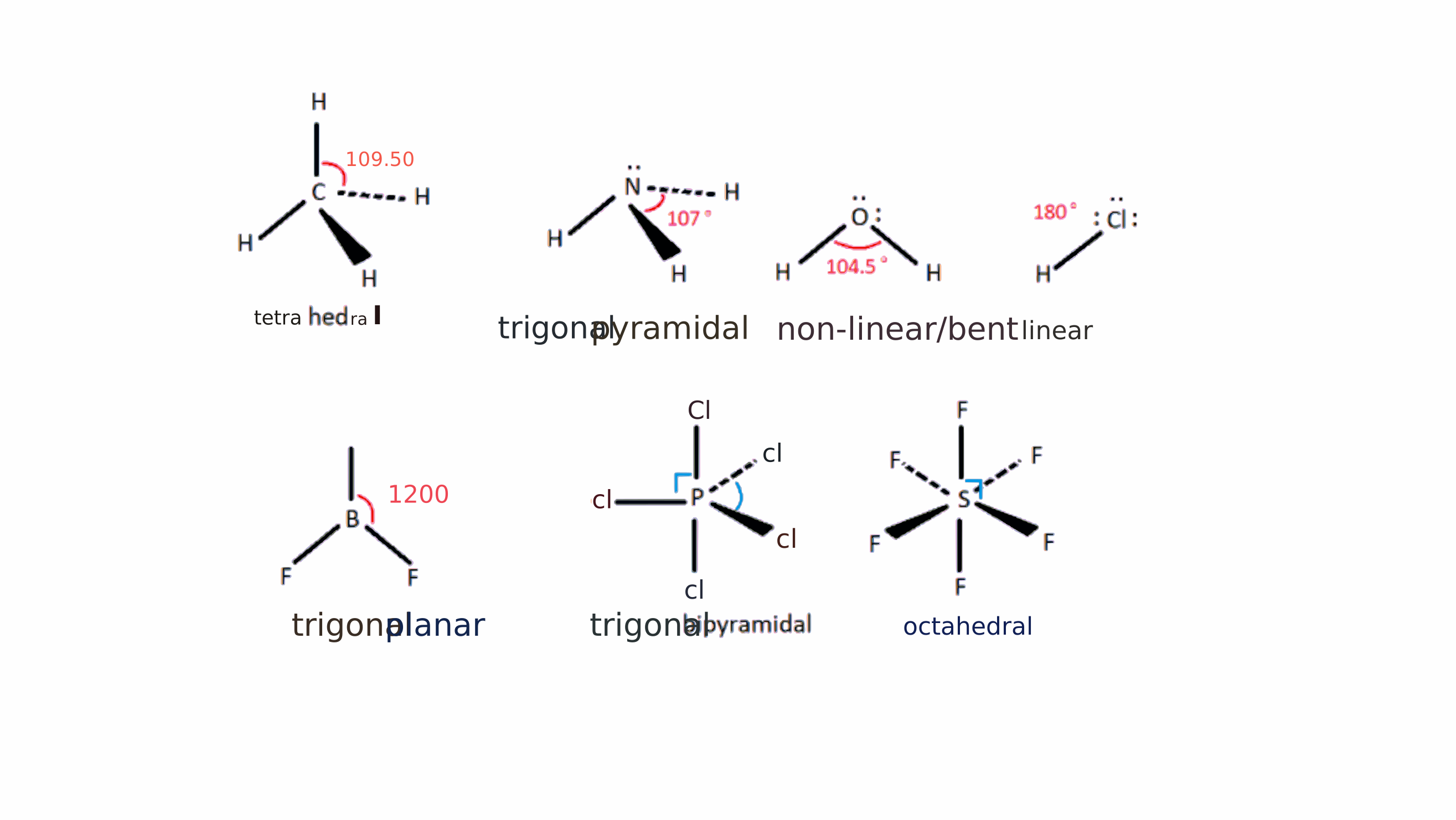
Sign in free to see the rest of this lesson, the R.E.C.I.P.E. recall steps and the quiz
BrainCake is free. Make an account in seconds and pick up where this page stops.
Key terms in this lesson
- Ion
- A positively or negatively charged atom or group of atoms, formed by the loss or gain of electrons.
- Polyatomic ion
- An ion that is made up of more than one element.
- Lone pair
- A pair of outer-shell electrons that is not involved in bonding.
More in Shapes and Intermolecular Forces
- Three and Four Electron Pairs
- BF3 and SF6 and PCl5
- Polyatomic ions.
- More examples.
- Electronegativity
- Bond Polarity
- Polar Solvents and Solubility
- Induced Dipole-Dipole Interactions (London Forces)
All 13 lessons in Shapes and Intermolecular Forces · All OCR AS-level Chemistry topics