Intermolecular forces are weak interactions between the dipoles of molecules. There are three types of intermolecular forces: induced dipole-dipole interactions (London forces), permanent dipole-dipole interactions and hydrogen bonds. Intermolecular forces are largely responsible for physical properties such as melting and boiling points.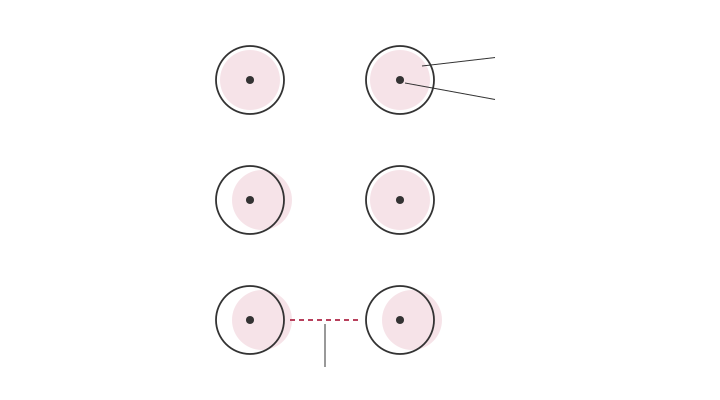
The instantaneous dipole-induced dipole interactions are temporary and constantly shifting. Atoms with more electrons have stronger London forces. Van der Waal's forces is a term used for both permanent dipole-dipole interactions and London forces.
At any one instant there is an uneven distribution of electrons due to their random movement. At any instant this movement of electrons produces an instantaneous dipole which changes position as the electrons move. The instantaneous dipole induces a dipole in a neighbouring molecule and the two molecules attract each other.
The instantaneous dipole-induced dipole interactions are temporary and constantly shifting. Atoms with more electrons have stronger London forces. Van der Waal's forces is a term used for both permanent dipole-dipole interactions and London forces.