 BRAINCAKE
The Molecular Ion Peak
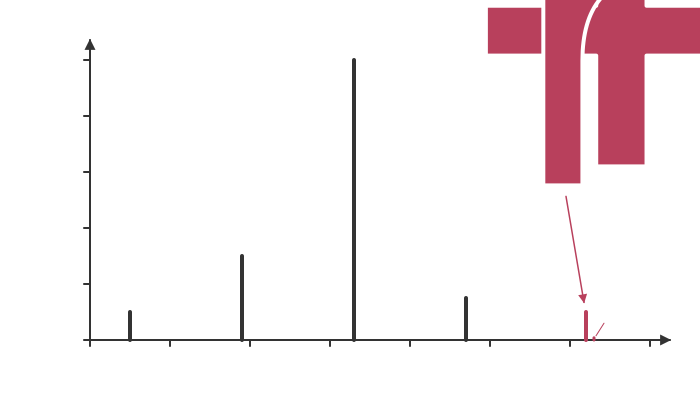
The molecular ion peak, M+, is produced by molecules that have lost one electron but have not broken apart:
M(g) → M+(g) + e−
Because the molecular ion has the same mass as the whole molecule, it is the peak with the highest m/z value in the spectrum, ignoring the very small M+1 peak one unit above it. Its m/z value gives the relative molecular mass, Mr, of the compound.
Sign in free to see the rest of this lesson, the R.E.C.I.P.E. recall steps and the quiz
BrainCake is free. Make an account in seconds and pick up where this page stops.
Key terms in this lesson
- mass-to-charge ratio
- The ratio of the mass of an ion to its charge, given the symbol m/z, used to identify ions in a mass spectrum.
More in Analytical Techniques
- Bond Vibrations and IR Absorption
- Characteristic IR Absorptions
- Interpreting IR Spectra
- IR in Breathalysers and Pollution Monitoring
- Mass Spectrometry of Organic Compounds
- The M+1 Peak
- Fragmentation
- Combining IR and Mass Spectra
All 10 lessons in Analytical Techniques · All OCR AS-level Chemistry topics