Most non-metals exist as simple covalent molecules. In the solid state, the molecules are held together in a simple molecular lattice structure by weak intermolecular forces.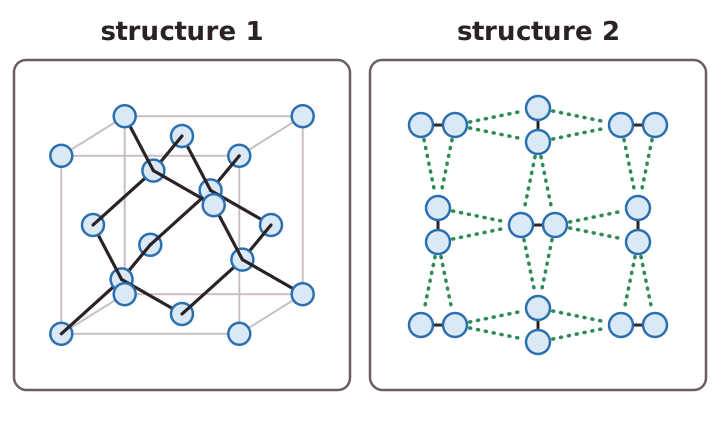 Carbon and silicon have a different structure. Their atoms are held together in a giant covalent lattice by strong covalent bonds.Substances with giant covalent lattice structures have high melting and boiling points because a lot of energy is needed to break the strong covalent bonds. They are insoluble in almost all solvents and, apart from graphite, are non-conductors of electricity.